Hormone Health
Eating for Your Hormones: The Complete Nutrition Guide
If your energy crashes at 3 p.m., your sleep is broken, your waistline is changing no matter what you do, or your mood swings feel like they have a mind of their own — your hormones are talking. And one of the loudest voices in that conversation is whatever is on your plate.
At Opteluxe Wellness in Mooresville, NC, we see this every day: patients come in for bioidentical hormone therapy or medically managed weight loss, and the first thing we look at alongside their labs is how they eat. Not because diet replaces medical treatment — it doesn't — but because hormones are literally built from food. Get the raw materials wrong and even the best treatment plan works uphill.
This guide breaks down exactly how eating affects your hormones, which foods help and which hurt, and how to put together a realistic hormone-friendly way of eating here in Lake Norman.
Table of Contents
- How Food Talks to Your Hormones
- The Four Hormones Your Diet Controls Most
- The Best Foods for Hormone Balance
- Foods and Habits That Disrupt Hormones
- Eating for Estrogen: Perimenopause and Menopause
- Eating for Testosterone: Men's Hormone Health
- A Sample Hormone-Friendly Day of Eating
- When Diet Isn't Enough
- Frequently Asked Questions
- Get Your Hormones Checked in Mooresville, NC
How Food Talks to Your Hormones
Hormones are chemical messengers, and your body manufactures them from the nutrients you eat. Three pathways matter most:
Building blocks. Steroid hormones — estrogen, progesterone, testosterone, DHEA, cortisol — are all synthesized from cholesterol. Peptide hormones like insulin and growth hormone are built from amino acids. A chronically low-protein or very low-fat diet starves these production lines.
Blood sugar signaling. Every meal sends an insulin response, and insulin doesn't operate in a vacuum. Chronically high insulin interferes with estrogen metabolism, drives ovarian androgen production in women, lowers testosterone in men, and keeps cortisol elevated.
Clearance. Hormones aren't just made — they have to be broken down and removed. Your liver and gut handle that job, and they run on fiber, cruciferous vegetables, hydration, and a healthy microbiome. Poor clearance means hormones recirculate longer than they should, which is a major driver of estrogen dominance symptoms.
The Four Hormones Your Diet Controls Most
Insulin
Insulin is the master metabolic hormone, and it is almost entirely diet-driven. Refined carbohydrates and sugar spike it; protein, fat, and fiber blunt it. When insulin stays elevated for years, cells stop responding — that's insulin resistance, the root of stubborn abdominal weight gain, prediabetes, and a cascade of sex-hormone problems.
Cortisol
Cortisol is your stress hormone, and it follows blood sugar like a shadow. Skipping meals, over-caffeinating on an empty stomach, and crash dieting all provoke cortisol release. Chronically high cortisol breaks down muscle, stores belly fat, disrupts sleep, and suppresses both thyroid function and sex hormone production.
Estrogen
Estrogen balance depends heavily on the liver and gut. Cruciferous vegetables support the liver pathways that metabolize estrogen into safer forms, while fiber binds excess estrogen in the gut so it can be excreted rather than reabsorbed. Alcohol does the opposite — it impairs estrogen clearance and raises circulating levels.
Testosterone
In both men and women, testosterone responds to diet quality. Adequate protein, zinc, magnesium, vitamin D, and healthy fats support production; chronic under-eating, excess alcohol, and abdominal body fat (which converts testosterone into estrogen via aromatase) suppress it. For men in the Lake Norman area noticing declining energy and drive, diet is step one — and testosterone evaluation is step two.
The Best Foods for Hormone Balance
You don't need a complicated protocol. You need consistent, quality inputs.
Quality protein at every meal. Eggs, wild-caught salmon, poultry, grass-fed beef, Greek yogurt, and legumes supply the amino acids your hormones and neurotransmitters are built from. Aim for 25–35 grams per meal — especially breakfast, which sets your blood sugar trajectory for the whole day.
Healthy fats. Avocado, extra virgin olive oil, walnuts, flaxseed, chia seeds, and fatty fish provide cholesterol and omega-3s. Omega-3s in particular reduce the inflammation that interferes with hormone receptor sensitivity.
Cruciferous vegetables. Broccoli, cauliflower, Brussels sprouts, kale, and cabbage contain indole-3-carbinol and sulforaphane, compounds that support healthy estrogen metabolism in the liver. This is one of the most evidence-backed food-hormone connections that exists.
Fiber — 25 to 30 grams a day. Vegetables, berries, beans, and ground flaxseed bind excess hormones in the digestive tract and feed the gut bacteria that regulate estrogen recirculation. Most Americans get half of what they need.
Fermented foods. Yogurt, kefir, sauerkraut, and kimchi support the microbiome — and a specific collection of gut bacteria (the estrobolome) directly regulates how much estrogen your body reabsorbs.
Magnesium-rich foods. Pumpkin seeds, dark leafy greens, dark chocolate, and almonds support sleep, blood sugar control, and the stress response. Magnesium is one of the most common deficiencies we see in patients with hormone complaints.
Foods and Habits That Disrupt Hormones
- Refined sugar and ultra-processed food. The single biggest dietary hormone disruptor. It spikes insulin, promotes belly fat, and drives inflammation that blunts hormone signaling.
- Excess alcohol. Alcohol impairs the liver's ability to clear estrogen, worsens hot flashes and sleep disruption, and directly suppresses testosterone production. Even moderate nightly drinking shows up in labs.
- Chronic under-eating and crash dieting. Severe calorie restriction is interpreted by your body as a famine. Thyroid output drops, cortisol rises, and sex hormone production shuts down. This is why aggressive dieting so often backfires — and why we favor a medically managed approach to weight loss.
- Liquid calories. Sweet tea, soda, juice, and fancy coffee drinks deliver sugar without any satiety signal. Swapping them for water or unsweetened options is one of the fastest hormone wins available.
- Meal chaos. Skipping breakfast, grazing all day, and eating late at night all scramble insulin and cortisol rhythms. Consistent meal timing is free hormone therapy.
Eating for Estrogen: Perimenopause and Menopause
During perimenopause, estrogen doesn't just decline — it fluctuates wildly. Nutrition can smooth those swings and reduce symptom severity:
- Anchor every meal with protein. Muscle is your metabolic engine, and declining estrogen accelerates muscle loss. Protein at each meal protects bone density, metabolism, and blood sugar stability.
- Eat fatty fish two to three times per week. Omega-3s are associated with fewer hot flashes and better mood.
- Load up on crucifers and fiber. As estrogen becomes erratic, healthy metabolism and clearance of its byproducts matters more than ever.
- Cut back on alcohol and added sugar. Both are strongly correlated with hot flash frequency and night sweats — and midlife metabolism is far less forgiving of them.
- Prioritize calcium, magnesium, and vitamin D. Bone loss accelerates sharply in the menopause transition.
Diet helps enormously — but when ovarian production truly declines, food cannot replace what the body no longer makes. That is exactly what bioidentical hormone replacement therapy (BHRT) is for, and nutrition makes BHRT work better.
Eating for Testosterone: Men's Hormone Health
Testosterone decline in men is gradual — about 1–2% per year after 40 — but diet can accelerate or slow that slide significantly:
- Don't chronically under-eat. Aggressive dieting crashes testosterone faster than almost anything else.
- Eat enough healthy fat. Testosterone is synthesized from cholesterol; very low-fat diets measurably lower it.
- Prioritize zinc and magnesium. Oysters, red meat, pumpkin seeds, and leafy greens cover two minerals directly involved in testosterone production.
- Lose the visceral fat, not your sanity. Belly fat contains aromatase, the enzyme that converts testosterone into estrogen. Sustainable fat loss through adequate protein and strength training — supported when needed by medical weight loss or peptide therapy — raises testosterone naturally.
- Limit alcohol. Beer in particular is estrogenic and directly suppresses testosterone output.
If symptoms like fatigue, low drive, and loss of strength persist despite cleaning up your diet, it's time for labs. Our men's health and testosterone therapy program starts with a free phone consultation and straightforward lab work.
A Sample Hormone-Friendly Day of Eating
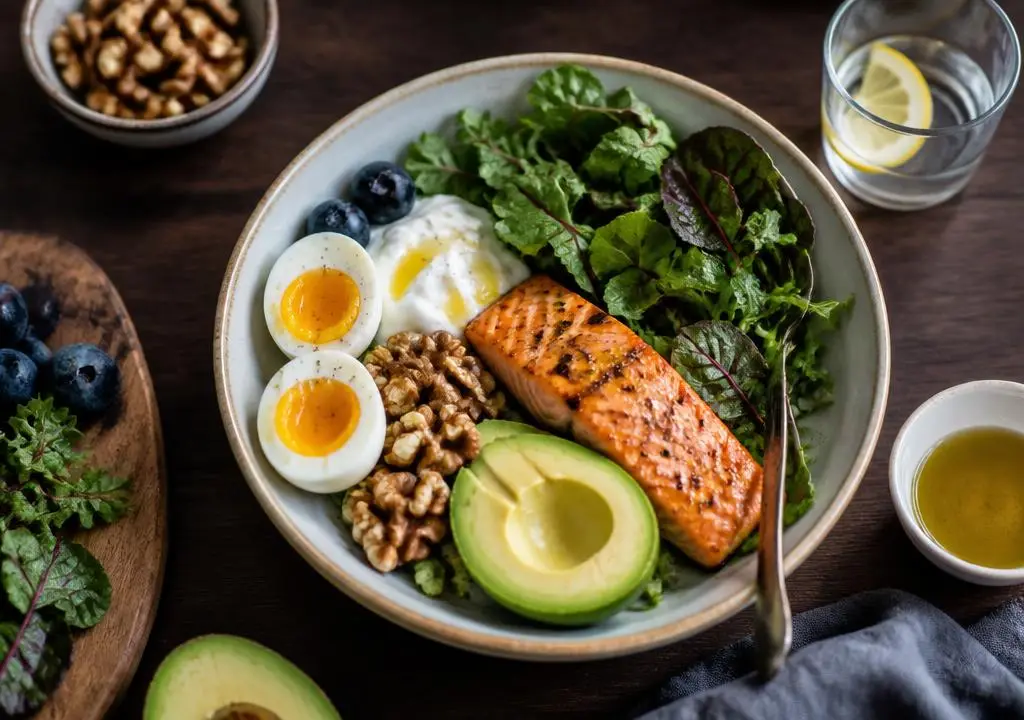
Breakfast: Three-egg vegetable omelet with spinach and mushrooms, half an avocado, and a side of berries. Protein and fat first thing in the morning stabilizes insulin and cortisol for hours.
Lunch: Big salad with grilled salmon, mixed greens, cruciferous slaw, pumpkin seeds, olive oil dressing, and quinoa.
Snack: Greek yogurt with ground flaxseed and walnuts.
Dinner: Grilled chicken or grass-fed steak, roasted Brussels sprouts and broccoli, and a sweet potato.
All day: Water (add minerals or electrolytes if you're active on the lake), and coffee before food — not instead of it.
Nothing exotic. No expensive powders. Consistency with real food beats any supplement stack, though targeted support like IV hydration and nutrient therapy can fill gaps when labs show deficiencies.
When Diet Isn't Enough
Here is the honest truth we tell every patient in our Mooresville clinic: you cannot eat your way out of a true hormone deficiency. If your ovaries have slowed estrogen production in menopause, if your testosterone is clinically low, or if your thyroid is underperforming, nutrition supports treatment — it doesn't substitute for it.
The right sequence looks like this:
- Test, don't guess. Comprehensive labs tell us exactly which hormones are off and by how much.
- Fix the foundation. Dial in protein, fiber, healthy fats, blood sugar stability, sleep, and alcohol.
- Treat what's deficient. Bioidentical hormones, testosterone therapy, thyroid support, or peptide protocols — matched to your labs, not a one-size-fits-all script.
- Re-test and adjust. Hormones respond in weeks to months; we track your labs and symptoms and tune the plan.
That combination — medicine plus nutrition — is where the real transformation happens.
Frequently Asked Questions
See the FAQ section below for answers to the most common questions we hear about eating for hormone health, from the best foods to how long dietary changes take to show up in your labs.
Get Your Hormones Checked in Mooresville, NC
If you're doing everything "right" with food and still feel exhausted, foggy, or stuck, your body is telling you something diet alone can't answer. Opteluxe Wellness offers comprehensive hormone evaluation, BHRT for women, testosterone therapy for men, medically managed weight loss, and peptide therapy — all under one roof in Mooresville, NC, serving Lake Norman, Cornelius, Davidson, Huntersville, and the greater Charlotte area.
Book a consultation today and let's find out what your hormones are actually doing.
Frequently Asked Questions
Can food really affect my hormones?
Yes. Every hormone in your body is built from the raw materials in your diet — protein supplies amino acids for peptide hormones, dietary fat supplies cholesterol for steroid hormones like estrogen and testosterone, and fiber helps your gut clear excess hormones. Meal timing and blood sugar stability directly influence insulin and cortisol, two of the most powerful hormones you have.
What are the best foods for hormone balance?
The core of a hormone-friendly plate is quality protein (wild salmon, eggs, poultry, grass-fed meat), healthy fats (avocado, olive oil, nuts, seeds), cruciferous vegetables (broccoli, cauliflower, Brussels sprouts) for estrogen metabolism, high-fiber carbohydrates, and fermented foods for gut health. These foods provide the building blocks and clearance pathways hormones need.
What foods disrupt hormones the most?
The biggest disruptors are refined sugar and ultra-processed foods (which spike insulin), excess alcohol (which impairs estrogen clearance in the liver), industrial seed oils in large amounts, and chronic under-eating or crash dieting, which suppresses thyroid and sex hormone production. Consistency matters more than any single food.
How does blood sugar affect hormones?
Every blood sugar spike triggers an insulin surge, and chronically elevated insulin drives weight gain around the midsection, increases androgen production in women, and worsens cortisol patterns. Eating protein and fat before carbohydrates, avoiding liquid sugar, and not skipping meals are the three fastest ways to stabilize the insulin-cortisol loop.
Can diet fix a hormone imbalance on its own?
Diet is foundational, but it has limits. If your ovaries, testes, or thyroid have significantly slowed production — as happens with perimenopause, menopause, and andropause — no amount of salmon and broccoli will fully restore hormone levels. That is when a medical evaluation and treatments like bioidentical hormone therapy make the difference. Diet makes those treatments work better.
What should I eat during perimenopause or menopause?
Prioritize protein at every meal (25–35 grams) to protect muscle and bone, omega-3 rich fish two to three times per week, calcium and magnesium-rich foods, cruciferous vegetables for healthy estrogen metabolism, and fiber at 25–30 grams daily. Limiting alcohol and added sugar noticeably reduces hot flashes and sleep disruption for many women.
Does eating fat raise cholesterol or help hormones?
Healthy fats help hormones. Cholesterol is the literal precursor molecule for estrogen, progesterone, testosterone, DHEA, and cortisol — chronically low-fat diets can suppress sex hormone production. Focus on olive oil, avocado, nuts, fatty fish, and eggs while limiting deep-fried and ultra-processed fats.
How long does it take for diet changes to affect hormones?
Blood sugar and insulin respond within days. Energy, sleep, and mood improvements usually appear within two to four weeks. Measurable changes in sex hormone and thyroid labs typically take eight to twelve weeks of consistent eating, which is why we pair nutrition guidance with lab testing rather than guessing.
Should I do intermittent fasting for hormone balance?
It depends on the person. Gentle time-restricted eating (12–14 hours overnight) is safe for most people and supports insulin sensitivity. Aggressive fasting can raise cortisol and worsen thyroid and sex hormone output in some women, especially during perimenopause. We recommend individualizing fasting based on your labs and symptoms.
Where can I get my hormones tested near Lake Norman?
Opteluxe Wellness offers comprehensive hormone evaluation and lab testing in Mooresville, NC, serving Lake Norman and the greater Charlotte area, including Cornelius, Davidson, and Huntersville. We combine lab work with nutrition guidance, bioidentical hormone therapy, peptides, and medical weight loss to build a complete plan.
Ready to experience it?
Book a consultation with our team in Mooresville, NC and start your wellness journey today.
Book Your Consultation